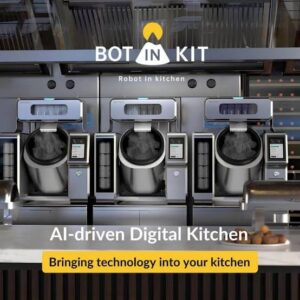

In 2026, a hand-written recipe card isn’t a legacy; it’s a liability that threatens your brand’s scalability across the Canadian market. You’ve likely experienced the frustration of inconsistent flavour profiles between shifts or the sting of high food waste caused by simple manual errors. It’s a reality where the success of your signature dish depends entirely on who’s holding the pan. By digitizing commercial kitchen recipes, you move beyond these human limitations and turn your culinary intuition into a high-performance digital asset.
We understand that maintaining total consistency across multiple locations feels like a constant challenge, especially with the current labour pressures on the hospitality sector. This guide will show you how to transition from static spreadsheets to a dynamic system that drives operational efficiency. You’ll discover how to achieve real-time menu updates and leverage advanced culinary automation technology, such as the precision systems pioneered by Cognitron Robotics, to ensure absolute consistency and flavour integrity. We’ll also look at modern financing options like the BDC LIFT program to help you realize this technological shift and future-proof your kitchen.
Key Takeaways
- Learn why moving away from traditional paper binders is essential for overcoming the 2026 labour shortages in the Canadian hospitality sector.
- Discover the strategic roadmap for digitizing commercial kitchen recipes by transforming static files into executable data that manages heat and seasoning.
- Realize total flavour consistency across all national locations, ensuring your signature menu tastes the same from coast to coast.
- Understand how the BOTINKIT OMNI acts as the hardware bridge that turns digital instructions into flawless, automated culinary results.
- Identify the exact steps to reduce food waste and operational costs through precision-driven ingredient dispensing and standardized workflows.
The Evolution of Recipe Management in Canadian Food Service
For decades, the paper binder served as the fragile heartbeat of the Canadian kitchen. It housed the secrets to signature sauces and seasonal specials; however, it also created a precarious bottleneck. When a head chef departs, they frequently take years of unwritten technical nuance with them. In the current market, where the Canadian quick-service sector is valued at over $37 billion, relying on individual memory is a strategic risk. Digitizing commercial kitchen recipes isn’t just about moving text to a screen. It’s about converting culinary intuition into executable operational control that survives staff turnover.
The High Cost of the Paper Binder
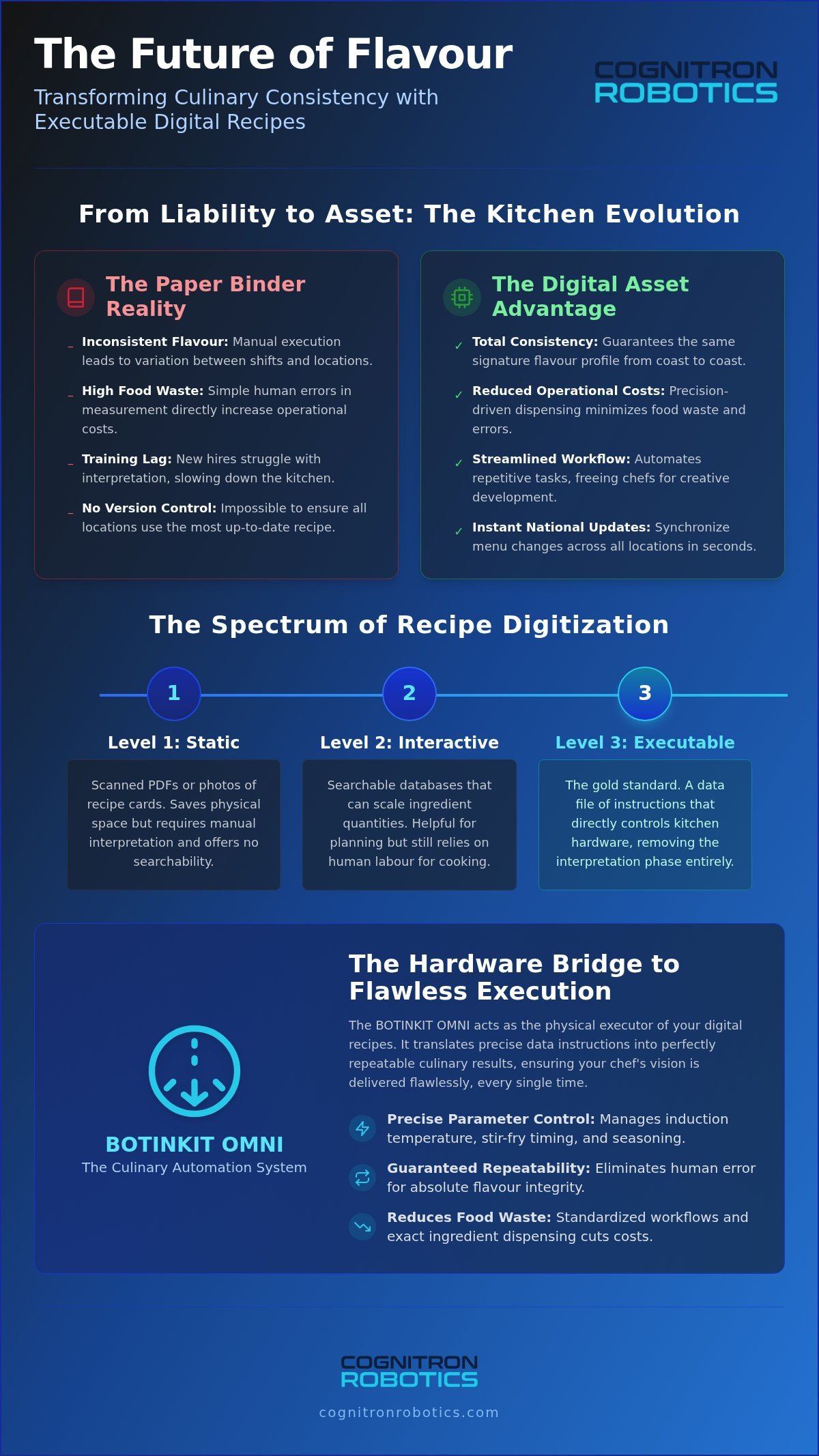
Paper binders fail under the physical stress of high-volume environments. Steam, grease, and heat eventually render them illegible. More importantly, they offer zero version control. For a national franchise, ensuring that a location in Halifax and another in Vancouver use the exact same seasoning ratio is nearly impossible with physical manuals. This disconnect leads to training lag. New hires spend too much time second-guessing measurements, which spikes food waste and inflates labour costs. By digitizing these assets, you integrate Hazard Analysis and Critical Control Points (HACCP) directly into the workflow. Digital systems don’t just suggest a temperature; they can enforce it, ensuring safety and quality are never left to chance.
Digital Transformation as a Competitive Advantage
Modern kitchen staff are tech-native. They find digital interfaces more intuitive than bulky binders. Transitioning to a digital-first model allows you to maintain rigorous brand standards even with a rotating workforce. It removes the human variable from repetitive seasoning tasks. This transformation allows your most skilled chefs to focus on creative development while automated systems like the BOTINKIT OMNI handle the precision execution. National scalability becomes a matter of data synchronization. You can update a menu across the country in seconds, ensuring every customer receives the exact same flavour profile every time. This technology bridges the gap between high-level culinary vision and the daily reality of high-volume production. Digitizing commercial kitchen recipes is the foundation of a modern, resilient food service business.
Beyond PDFs: Moving from Static Files to Executable Digital Recipes
Many operators assume that moving a recipe from a binder to a tablet is the finish line. In reality, that’s only the first step. True efficiency in 2026 requires moving beyond viewing data to executing it. Digitization exists on a spectrum of maturity, and understanding where your operation sits is vital for long-term growth. Digitizing commercial kitchen recipes at the highest level transforms them into active instructions rather than passive references.
- Level 1: Static Digitization. This involves scanned PDFs or photos of recipe cards. While it saves physical space, it offers no searchability and still requires manual interpretation.
- Level 2: Interactive Digitization. These are searchable databases that can automatically scale ingredient quantities based on batch size. While helpful, they still rely on human labour for the actual cooking.
- Level 3: Executable Digitization. This is the gold standard. Here, the recipe is a set of instructions that directly control kitchen hardware. This removes the “interpretation” phase entirely.
What is an Executable Digital Recipe?
An executable digital recipe is more than a list of ingredients. It’s a sophisticated data file containing precise parameters for induction temperature, stir-fry timing, and seasoning dispensing. When these recipes interface with systems like the BOTINKIT OMNI, the kitchen’s role shifts. Your team moves from “reading a recipe” to “monitoring a process.” This transition is reflected in modern culinary education, where the focus increasingly includes resource management alongside traditional techniques. The digital file acts as the bridge between the chef’s vision and the machine’s perfect repeatability.
Comparing Interactive vs. Executable Systems
Interactive systems still leave significant room for human error. A staff member might read the correct scaled measurement but still over-salt a dish during a busy lunch rush. Executable systems eliminate this risk through digital dispensing. The BOTINKIT OMNI handles liquid and powder seasonings with exactness that a human hand can’t match. Choosing the right level of digitizing commercial kitchen recipes depends on your volume. For national chains, the executable model is the only way to guarantee consistency. If you’re ready to see how this works in practice, you can explore automated cooking solutions designed for the Canadian market. This shift doesn’t just save time; it protects your brand’s most valuable asset: its signature flavour profile.
Strategic Benefits of Digitizing Recipes for National Restaurant Chains
Operating a national brand across Canada presents unique geographical and operational hurdles. With over 21,000 quick-service locations nationwide, the challenge isn’t just about opening doors; it’s about maintaining a unified identity from the Maritimes to the West Coast. Digitizing commercial kitchen recipes provides the infrastructure for this level of scale. It allows a central culinary team to push menu updates to a thousand kitchens simultaneously. This ensures that a seasonal promotion launches with perfect synchronization across every province, regardless of local labour fluctuations.
Solving the Consistency Crisis
The primary enemy of a national chain is variance. When a guest visits your franchise, they expect the exact flavour profile they’ve come to love. Traditional methods often fail here because they rely on human interpretation of heat levels and seasoning volume. By digitizing commercial kitchen recipes, you eliminate the “chef-to-chef” variance that often plagues high-volume stir-fry or sauté stations. The BOTINKIT OMNI executes these digital instructions with robotic precision, dispensing ingredients and managing temperatures to a degree that manual cooking cannot match. This precision doesn’t just protect the guest experience; it protects your margins by radically reducing food waste caused by seasoning errors or over-cooking.
Your recipes are your brand’s most valuable intellectual property. Storing them in secure, digital vaults ensures that your proprietary techniques remain protected and centralized. It removes the risk of losing “secret sauce” knowledge when a long-term employee moves on. This centralization also allows for rapid menu agility. If ingredient costs shift or a new trend emerges, you can adjust your digital assets and update your entire fleet with a single click, maintaining profitability in a volatile Canadian market.
Empowering the Workforce
The 2026 labour market in Canada is increasingly defined by a tech-native workforce that values efficiency and modern tools. By automating repetitive tasks, you reduce the mental load on your kitchen staff during peak lunch and dinner rushes. This shift allows your team to focus on the creative aspects of food presentation and direct guest interaction. It transforms the kitchen into a sophisticated, modernized environment that is far more attractive to Gen Z talent. When the technology handles the repetitive seasoning and timing, your staff can focus on the human elements of hospitality, creating a more sustainable and productive work culture across your entire operation.
Step-by-Step: Transitioning Your Kitchen to a Digital-First Workflow
Moving from a paper-based system to a digital-first workflow requires more than just uploading Word documents. It demands a systematic re-engineering of your culinary processes. Digitizing commercial kitchen recipes involves stripping away the ambiguity of “a splash” or “medium-high heat” and replacing it with absolute values. This precision is what allows robotic systems to replicate a master chef’s technique with perfect repeatability. It’s a transition from subjective craft to objective data.
The Audit and Deconstruction Phase
Start with a rigorous audit of your current library. You must standardize units of measure across every location to ensure digital accuracy. Weight-based measurements in grams are superior to volume-based millilitres because they account for ingredient density and minimize variance. You then deconstruct each dish into four primary data points: weight, time, heat curves, and sequence. This process captures the nuance of the wok by translating manual techniques into a thermal and temporal map. Identifying which recipes are best suited for robotic automation is vital. Focus on high-volume, repetitive stir-fry or sauté dishes where human fatigue often leads to inconsistent flavour profiles.
Selecting the right platform is the next critical step. Your software must support executable data that interfaces directly with your hardware. Static viewers are insufficient for the needs of a 2026 commercial kitchen. You need a system that doesn’t just show a recipe but drives the process. This ensures that the instructions you’ve meticulously deconstructed are the exact ones the machine follows. It turns your recipes into high-performance assets that are immune to human error.
Implementation and Staff Adoption
Once your data is structured, pilot the workflow in a controlled test kitchen environment. This allows you to refine heat settings and dispensing sequences without the pressure of a live lunch rush. Addressing “robot anxiety” among your team is a critical part of this phase. Conduct hands-on demonstrations to show staff that the technology is a tool for liberation. It handles the repetitive, physically demanding seasoning and tossing, allowing them to focus on plating and guest experience. This creates a more sophisticated work environment that values technical oversight over manual labour.
Establishing a centre of excellence ensures your digital library remains a living, evolving asset. Set up feedback loops where kitchen managers can suggest refinements based on real-world ingredient variations. This collaborative approach turns digitizing commercial kitchen recipes into a culture of continuous optimization. To begin your transition with industry-leading automated hardware, you can request a BOTINKIT OMNI demonstration today. This methodical rollout ensures that your brand standards are protected while your operation gains the agility of a digital-first enterprise.
Executing Excellence with the BOTINKIT OMNI Robotic Cooking System
The transition from paper binders to executable data finds its physical manifestation in the BOTINKIT OMNI. While the previous steps focused on the structural integrity of your data, this stage is where that data becomes a tangible guest experience. Digitizing commercial kitchen recipes is a hollow exercise without the hardware capable of interpreting those instructions with absolute fidelity. The BOTINKIT OMNI acts as the final, critical link in the chain, breathing life into your digital library through advanced stir-fry technology and integrated seasoning dispensing.
The Hardware-Software Synergy
The power of the BOTINKIT OMNI lies in its ability to synchronize digital instructions with real-time robotic movements. It doesn’t just cook; it executes a thermal map. Integrated sensors monitor the pan’s temperature hundreds of times per minute, adjusting the induction heat to match the exact requirements of your digital recipe. This level of precision ensures that the Maillard reaction occurs perfectly every time, regardless of whether it’s the first or five-hundredth dish of the day. By removing human limitation from the sauté process, the system achieves a level of repeatability that was previously impossible in high-volume environments.
This synergy is the logical conclusion of the journey toward digitizing commercial kitchen recipes. The hardware handles the powder and liquid seasoning dispensing with milligram accuracy, eliminating the flavour drift that typically occurs when staff are rushed. It transforms the kitchen into a centre of precision engineering where quality is a constant, not a variable. Your culinary vision is no longer subject to the fatigue or distraction of an operator; it’s protected by a system designed for flawless execution.
Future-Proofing Your Commercial Kitchen
Preparing for the next decade of food service requires a fundamental shift in how we view kitchen operations. The ROI of an automated, digital-first model is found in the radical reduction of food waste and the stabilization of labour costs. In a Canadian market where ingredient prices remain volatile, the ability to control every gram of output is a significant competitive advantage. You are not just buying a machine; you are installing a platform for continuous improvement and national scalability. It allows you to expand your brand across provinces with the confidence that your signature flavour remains uncompromised.
The era of manual, inconsistent kitchen processes is closing. Forward-thinking operators are already realizing the benefits of a streamlined, tech-enabled workflow that empowers their staff and delights their customers. You can discover how the BOTINKIT OMNI can revolutionize your kitchen and help you claim your place at the forefront of culinary innovation. This is the future of the Canadian food service industry: precise, efficient, and undeniably consistent.
Secure Your Competitive Edge in the Automated Kitchen
The transition from paper binders to executable code is no longer a luxury for Canadian operators; it’s a strategic necessity. By digitizing commercial kitchen recipes, you transform your culinary intellectual property into a high-performance asset that guarantees flavour consistency across every province. This digital-first approach removes the risk of human error and ensures your brand standards remain uncompromised, even in the face of persistent labour challenges.
The BOTINKIT OMNI represents the pinnacle of this evolution, offering precision seasoning technology and a proven ROI in high-volume environments. With national Canadian support and distribution, we provide the infrastructure needed to scale your vision coast to coast. You have the opportunity to lead the industry by embracing a future where technology handles the repetitive and humans focus on the creative. Book a BOTINKIT OMNI Demonstration Today to see how we can optimize your operation. The path to total culinary consistency starts with a single digital step.
Frequently Asked Questions
How do I start digitizing my commercial kitchen recipes?
Begin by auditing your current manual library and standardizing all measurements into grams. You must deconstruct each dish into specific data points: precise induction temperatures, stir-fry durations, and the exact sequence of ingredient additions. This methodical deconstruction is the first step in digitizing commercial kitchen recipes. Once your culinary logic is mapped to data, you can upload it to a cloud-based management system that communicates directly with your kitchen hardware.
What is the best software for managing restaurant recipes in Canada?
The ideal solution in Canada is a platform that offers cloud-based synchronization and executable data capabilities. While many apps provide simple inventory tracking, the most effective software for high-volume operations is one that integrates directly with robotic hardware. The BOTINKIT OMNI features built-in cloud recipe sharing, allowing you to push menu updates to every location across the country instantly. This ensures that your technical standards are met regardless of local operator variance.
Can digital recipes really help reduce food waste in professional kitchens?
Digital recipes radically reduce food waste by eliminating the human margin of error in seasoning and heat management. Manual over-seasoning or burnt batches are common causes of ingredient loss in busy environments. By digitizing commercial kitchen recipes and using automated dispensing, you ensure that every dish uses the exact weight of sauce and spices required. This precision protects your margins and significantly lowers the volume of discarded food in professional kitchens.
Is robotic cooking technology compatible with traditional family recipes?
Robotic systems are highly compatible with traditional recipes because they replicate the specific thermal curves and mechanical movements of a master chef. You aren’t replacing the recipe; you’re recording its DNA. By capturing the precise timing and heat of a family signature dish, the BOTINKIT OMNI ensures that the signature flavour is preserved. It executes the same tossing and seasoning patterns every time, protecting your culinary heritage from inconsistent manual preparation.
How long does it take to transition a commercial kitchen to a digital system?
A full transition typically occurs over several weeks, depending on the complexity of your menu. The initial audit and data deconstruction phase usually takes ten to fourteen days for a standard menu. Once the digital assets are ready, pilot testing in a controlled environment and staff training can be completed in just a few days. This streamlined rollout ensures that your operation moves to a digital-first model without causing significant downtime or service interruptions.
Do I need a specialized IT team to manage digital recipe systems?
You don’t need a specialized IT department to manage these systems. Modern platforms are designed for culinary professionals, featuring intuitive touchscreens and user-friendly interfaces that require minimal technical knowledge. The BOTINKIT OMNI operates with a simple one-tap selection process, making it accessible for kitchen staff of all skill levels. Most maintenance and recipe updates are handled through cloud-based tools that are as easy to use as a standard smartphone application.
What are executable recipes and why are they different from PDFs?
Executable recipes are active data files that directly control kitchen hardware, whereas PDFs are merely static digital images of paper documents. A PDF still requires a human to read, interpret, and manually execute the instructions, which leaves room for error. An executable recipe contains the specific code for temperature management, timing, and automated dispensing. It transforms a recipe from a passive reference into a proactive set of instructions that the cooking system follows perfectly.
How does the BOTINKIT OMNI ensure flavour consistency across locations?
Flavour consistency is achieved through the synchronization of cloud-based digital recipes with automated seasoning and induction control. When you update a recipe centrally, the change is pushed to every BOTINKIT OMNI unit in your fleet simultaneously. The system’s integrated sensors and robotic dispensers then replicate the exact seasoning ratios and heat levels at every location. This ensures that your signature dish tastes identical in every province, protecting your brand’s reputation for quality.