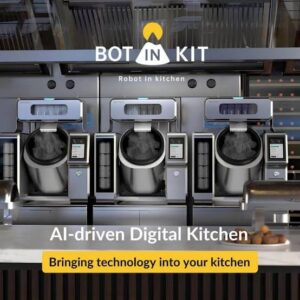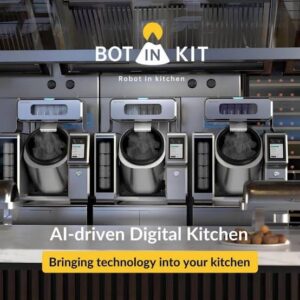

What if the secret to a perfectly scaled restaurant franchise isn’t finding the world’s best chef, but removing the requirement for one to handle every single pinch of salt? You likely already know the frustration of a signature dish tasting different on a Tuesday than it does on a Friday. Inconsistent flavour profiles across shifts or locations damage your brand and lead to expensive food waste. Integrating an automatic ingredient dispensing system transforms this operational volatility into a controlled, digital process.
By adopting this technology, you’ll discover how automated dispensing eliminates human error and ensures total flavour consistency across high-volume commercial kitchens. We will examine how precision dosing lowers ingredient costs and empowers your team to focus on high-level creativity rather than repetitive manual steps. From total repeatability of recipes to streamlined operations, we’ll preview the future of kitchen management where technology handles the exactness while humans drive the vision. This shift allows your brand to scale across Canada with confidence that every plate meets your exacting standards.
Key Takeaways
- Learn how transitioning from manual seasoning to digital precision eliminates the variability that often compromises signature dishes in high-volume kitchens.
- Understand the mechanical engineering behind an automatic ingredient dispensing system and how it integrates storage with precision delivery nozzles.
- Discover how exact dosing protects your bottom line by reducing ingredient shrinkage and the hidden costs of over-seasoning.
- Explore how cloud-based recipe management allows you to update menus across all Canadian locations instantly for guaranteed flavour consistency.
- See how the BOTINKIT OMNI empowers your kitchen staff to focus on culinary creativity while the technology masters the repetitive seasoning tasks.
The Evolution of Ingredient Dispensing in Commercial Kitchens
The traditional “pinch and dash” approach to seasoning has long been a hallmark of the culinary world. While this manual method allows for individual flair, it introduces a level of variability that modern high-volume operations simply cannot afford. Today’s commercial kitchens require more than just mechanical movement to survive; they need exactness. An automatic ingredient dispensing system represents a shift from bulk material handling to culinary-grade precision. It is a digital tool that treats seasoning as a precise science rather than a calculated guess. This evolution moves the kitchen away from the risks of “eyeballing” ingredients toward a future defined by total repeatability.
From Manual Measuring to Digital Precision
Peak hours in a busy kitchen create an environment where human error isn’t just possible, it’s expected. Even the most skilled chefs can over-season a dish when managing multiple orders simultaneously. Digital systems realize consistent results by removing the variables of fatigue and distraction. This level of control mirrors the technology found in a computerized medicine cabinet, where safety and exact dosing are paramount. By prioritizing repeatability, kitchen operators can ensure that the tenth dish of the night is identical to the first. This optimization transforms efficiency from a goal into a measurable reality that doesn’t depend on the experience level of the staff on shift.
Why Standardizing Seasoning is the Key to Scaling
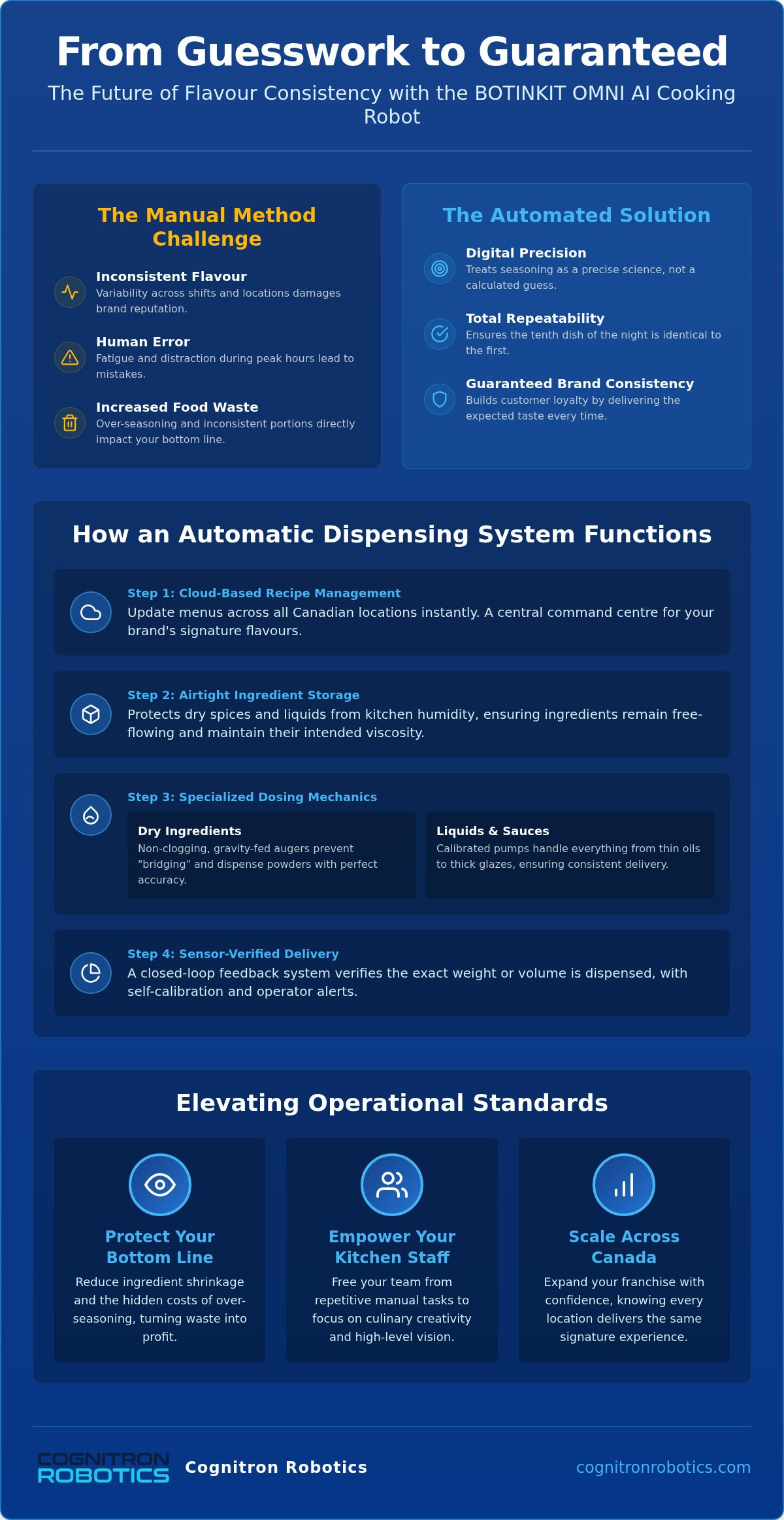
Maintaining a signature flavour across multiple locations is the greatest challenge for any growing franchise. When seasoning is left to manual interpretation, the brand’s identity becomes fragmented. Automated dispensing acts as the anchor for brand consistency, ensuring that every location delivers the same experience. This precision builds customer loyalty. Diners return because they trust the taste will be exactly what they expect. For Canadian franchises looking to expand, the stakes are high. Labour costs are rising, and finding skilled chefs who can maintain consistency is increasingly difficult. Precision seasoning isn’t just about taste; it’s about protecting margins. Every gram of over-seasoning is a direct hit to your bottom line. By integrating systems like the BOTINKIT OMNI, operators can update recipes centrally and push those changes to every unit. This capability allows humans to focus on creative strategy while the hardware handles the repetitive, granular tasks that define a brand’s success.
How an Automatic Ingredient Dispensing System Functions
Understanding the mechanical sophistication of an automatic ingredient dispensing system requires looking beyond simple hoppers and chutes. These systems represent a highly engineered ecosystem where storage, precision dosing, and delivery nozzles work in perfect synchronization. In a high-volume kitchen, the system acts as the digital hands of the operation. It integrates airtight storage containers that protect ingredients from the intense humidity of a cooking line, ensuring that dry spices remain free-flowing and liquids maintain their intended viscosity. Every component, from the dosing valves to the delivery nozzles, is designed to eliminate the variability that plagues manual seasoning.
Modern kitchen automation technology relies on advanced sensors to verify that the exact weight or volume has been dispensed before it ever reaches the pan. This closed-loop feedback system ensures that if a nozzle is partially blocked or a container is low, the system can alert the operator or self-calibrate. This level of oversight is what allows the BOTINKIT OMNI to maintain such high standards of repeatability, even during the most demanding dinner rushes. If you’re looking to see this precision in action, you can explore the technical capabilities of the BOTINKIT OMNI cooking platform.
The Mechanics of Dry and Liquid Dosing
Handling powdery spices versus viscous sauces requires distinct mechanical approaches. Modern systems utilize specialized non-clogging mechanisms to prevent “bridging” in dry ingredients, a common issue where powders clump together in humid environments. While dry ingredients often rely on precise gravity-fed augers, liquids and thick sauces typically use pump-driven delivery methods. These pumps are calibrated to handle varying levels of thickness, from thin oils to heavy soy-based glazes. This ensures that every millilitre is accounted for, preventing the over-seasoning that leads to food waste and inconsistent flavour profiles.
Integration with the Cooking Cycle
The true power of automated dispensing lies in its timing. A stir-fry operation is a sequence of events where the order of ingredients determines the final quality. The system’s software manages this sequence with millisecond precision:
- Aromatics: Garlic and ginger oils are dispensed early to infuse the base.
- Main Seasoning: Dry spices are added at the peak of the heat cycle to toast and release essential oils.
- Finishing Sauces: Viscous glazes are added at the end to prevent burning and ensure a perfect coating.
To prevent spoilage, the dispensing area is often thermally isolated from the high-heat induction zones. This temperature control keeps sauces fresh and prevents dry spices from losing their potency. By automating these steps, the system ensures that the complex chemical reactions required for great flavour happen exactly as the recipe dictates, every single time.
Eliminating Human Error and Food Waste with Precision Dosing
In a high-volume restaurant chain, the cumulative cost of over-seasoning is often a hidden drain on profitability. When a chef manually adds an extra two grams of a premium spice blend or a splash too much of expensive sesame oil, the individual error seems negligible. However, across a national franchise serving thousands of meals daily, these micro-errors translate into thousands of dollars in lost margin every month. An automatic ingredient dispensing system eliminates this variability by ensuring that every dose is measured to the exact milligram. This precision also acts as a powerful deterrent against shrinkage and ingredient theft, as every gram dispensed is digitally logged and reconciled against sales data in real time.
The Financial Impact of Ingredient Accuracy
Realizing savings on expensive oils and spices requires a shift in how kitchens view their inventory. Traditional manual wok stations often see a waste profile where up to 10% of ingredients are lost to spills, over-pouring, or improper storage. Automated systems reduce this waste to near zero. Yield optimization in the context of robotic cooking is the ability to maximize the number of consistent portions produced from a specific volume of raw ingredients. By removing the human buffer typically required to account for errors, operators can tighten their procurement cycles and lower their overall food cost percentage. The automated dry ingredient dispenser design process highlights the engineering necessity of these tight tolerances to ensure operational reliability in commercial settings.
Improving Kitchen Safety and Hygiene
Beyond the balance sheet, enclosed dispensing systems create a fundamentally cleaner and safer working environment. By removing manual contact with raw ingredients and seasonings, these systems significantly reduce the risk of cross-contamination. This is particularly vital in kitchens managing allergens or high-protein menus where hygiene is non-negotiable. The BOTINKIT OMNI features modular dispensing components that are easy to remove and clean, helping operators meet strict Canadian food safety standards with minimal downtime.
Employee wellness also sees a direct benefit. Manual stir-frying and repetitive seasoning motions are leading causes of repetitive strain injuries in the culinary industry. Automation liberates staff from these taxing physical demands, allowing them to focus on plating aesthetics and customer service. The result is a more professional kitchen culture where technology handles the mess and the strain. This leaves a pristine workspace that reflects the brand’s commitment to high operational standards and employee safety.
Integrating Digital Recipe Management for National Consistency
The hardware components discussed previously are only as effective as the logic that drives them. In a modern kitchen, software acts as the central nervous system for the automatic ingredient dispensing system. It bridges the gap between a chef’s creative intent and the mechanical execution of the BOTINKIT OMNI. This digital layer allows culinary teams to organize complex seasoning sequences through an intuitive user interface. Instead of programming lines of code, chefs use a visual platform to tweak flavour profiles and adjust dosing amounts. This control ensures that every pinch of salt and every millilitre of sauce is dispensed at the exact moment required by the recipe. Data logging further secures quality control by recording every action, creating a transparent audit trail for every dish served.
Cloud-Based Recipe Distribution
Scaling a new menu item across a national franchise used to require weeks of staff retraining and physical recipe binders. Digital management changes this dynamic entirely. Head chefs can now update a recipe at a central headquarters and push that update to every machine across Canada instantly. This synchronization eliminates the risk of regional variations in taste. It also protects proprietary restaurant recipes through encrypted cloud storage, ensuring that your signature flavours remain a guarded trade secret. Because the system provides step-by-step digital instructions, it minimizes the learning curve for new staff. They can produce professional-grade results from day one without extensive manual training.
Real-Time Monitoring and Analytics
Data logging transforms quality control from a reactive task into a proactive strategy. Managers can track ingredient usage levels remotely, gaining a clear view of inventory across multiple locations without stepping foot in a kitchen. The system provides “low ingredient” alerts that prevent service interruptions before they happen. By analyzing dispensing data, operators can forecast future purchasing needs with high accuracy. This level of insight allows for leaner inventory management and reduced overhead. This connectivity ensures that your operation remains efficient and profitable, even as you scale. To see how this digital platform can revolutionize your operations, explore the BOTINKIT OMNI recipe management system.
Elevating Operational Standards with the BOTINKIT OMNI
The BOTINKIT OMNI represents the ultimate execution of automated dispensing technology. It creates a seamless harmony between the physical act of stir-frying and the digital precision of an automatic ingredient dispensing system. This integration isn’t just about replacing a manual step; it’s about elevating the entire operational standard of a commercial kitchen. By combining a robotic wok with a precision seasoning system, Cognitron Robotics provides a solution that guarantees flavour consistency while liberating culinary teams. Chefs are no longer tethered to the repetitive, granular tasks of measuring and pouring. Instead, they’re empowered to focus on menu innovation and the guest experience, driving the creative soul of the restaurant forward.
The BOTINKIT OMNI Advantage
The BOTINKIT OMNI advantage lies in its sophisticated simplicity. The unit features a crisp, functional design that integrates effortlessly into existing Canadian kitchen lines without requiring a total overhaul of the workspace. Its user interface is designed for daily high-pressure operations, allowing staff to manage complex recipes with minimal training. This capability is critical for operators currently navigating acute labour shortages. By automating the most technically demanding aspects of the cooking process, the system reduces the reliance on highly specialized wok chefs. It allows a broader range of staff members to produce consistent, high-quality results, ensuring your kitchen remains productive regardless of staffing challenges.
Future-Proofing Your Food Service Business
Investing in robotic cooking technology today is a strategic move to future-proof your food service business. The long-term ROI of the BOTINKIT OMNI extends beyond labour savings. It encompasses reduced food waste, lowered ingredient costs, and the protection of your brand’s reputation for consistency across every location. As the industry moves toward a more digitized future, early adopters will find themselves better positioned to scale and compete in the crowded Canadian market. Cognitron Robotics stands as a reliable partner, offering the tools necessary to modernize operations while maintaining the highest culinary standards. Transitioning to automation allows you to realize a future where technology handles the repetitive so your team can focus on excellence.
Discover how Cognitron Robotics can transform your kitchen.
Mastering the Future of Culinary Execution
The shift toward kitchen automation is a necessary evolution for any high-volume operation looking to protect its margins and brand reputation. By replacing manual guesswork with an automatic ingredient dispensing system, you ensure that every dish meets your signature flavour profile without exception. This level of precision eliminates the hidden costs of over-seasoning and reduces food waste across your entire network. You’re no longer vulnerable to the variability of staff shifts or the challenges of finding specialized labour.
Digital recipe management allows you to scale with confidence, pushing updates to every location instantly to maintain 100% flavour consistency. With the BOTINKIT OMNI, you empower your staff to focus on creative plating and guest interaction while the technology handles the repetitive seasoning tasks. We provide expert Canadian support and implementation to ensure your transition to modern culinary standards is seamless and successful. The future of the commercial kitchen is defined by this harmony between human creativity and mechanical exactness.
Elevate your kitchen standards with the BOTINKIT OMNI and lead your business into a more efficient, profitable future. Your journey toward total kitchen optimization starts with a single step toward precision. Embrace the power of automation to realize your brand’s full potential across Canada.
Frequently Asked Questions
What exactly is an automatic ingredient dispensing system in a restaurant context?
An automatic ingredient dispensing system is a computerized hardware component that measures and releases seasonings with digital precision. In a restaurant, it replaces the variability of manual seasoning with exact, repeatable dosing. This technology ensures that every dish follows the digital recipe management instructions perfectly. It’s the brain of the modern kitchen, managing everything from dry spices to viscous sauces to guarantee a consistent flavour profile for every guest.
Can the BOTINKIT OMNI handle both liquid sauces and dry spices?
Yes, the BOTINKIT OMNI is engineered to manage a wide range of ingredients. It includes dedicated compartments for dry spices, liquid seasonings, and starch water. The system uses specialized pumps for viscous sauces and gravity-fed mechanisms for powders. This versatility allows it to handle complex stir-fry recipes that require multiple seasoning stages. Each container is designed with airtight seals to maintain ingredient freshness and prevent clumping in humid kitchen environments.
How much can a restaurant save on ingredient costs with automated dispensing?
Automated dispensing protects your bottom line by eliminating the hidden costs of over-seasoning. Traditional manual stations often experience significant ingredient waste due to human error and spills. By using an automatic ingredient dispensing system, you maximize your yield and ensure you get the exact number of portions from your inventory. This optimization reduces shrinkage and ingredient theft, as every gram dispensed is digitally logged and reconciled against sales data in real time.
Is it difficult to program new recipes into the dispensing system?
Programming new recipes is a streamlined process handled through an 8-inch touchscreen interface. Chefs don’t need coding knowledge to organize flavour profiles or tweak seasoning amounts. The cloud-based platform allows you to create a recipe once and push it to every machine in your network instantly. This centralized control is vital for Canadian franchises looking to maintain national consistency without the need for extensive, site-specific staff retraining or physical recipe binders.
Does the system require specialized training for kitchen staff to operate?
The system is designed for sophisticated simplicity, meaning it doesn’t require specialized culinary training to operate effectively. Because the BOTINKIT OMNI handles the technical complexities of temperature control and seasoning, your staff can focus on plating and service. This empowerment allows you to maintain high operational standards even when facing a shortage of skilled wok chefs. Most team members can master the intuitive interface after just a short orientation session.
How often do the ingredient dispensing components need to be cleaned?
Hygiene is a priority, so the system includes an AutoClean feature to simplify daily maintenance. The modular dispensing components are easy to remove and wash, ensuring you meet strict Canadian food safety regulations. Regular cleaning prevents flavour carry-over and ensures that nozzles remain free of clogs. This methodical approach to sanitation keeps the equipment running at peak performance while maintaining a pristine working environment that reflects your brand’s commitment to excellence.
Can this system help with food allergy safety and cross-contamination?
This technology significantly enhances food safety by reducing manual contact with raw ingredients. Enclosed storage and automated delivery minimize the risk of cross-contamination, which is essential for managing allergens. The system’s digital logging provides a transparent audit trail for every dish served. This data allows managers to verify exactly which ingredients were used, providing an extra layer of protection and confidence for guests with specific dietary requirements or sensitivities.
Is the BOTINKIT OMNI suitable for small ghost kitchens or just large chains?
While large chains value the national scalability, the BOTINKIT OMNI is equally effective in small ghost kitchens. Its compact, functional design fits into limited spaces where efficiency is paramount. Ghost kitchens benefit from the ability to produce high volumes of consistent food with fewer staff members. The system’s reliability and 24/7 operational capability make it an ideal partner for any food service business looking to modernize and future-proof their operations.