What if the right automation choice is the one that fits a single bottleneck, not the whole kitchen? Peak-hour demand can make consistency difficult, while labour shortages leave teams carrying repetitive cooking tasks. That’s why restaurant automation for quick service restaurants should start with your menu and workflow, then move to the technology that suits them.
Automation can support staff by taking on repeatable tasks, but not every process is a fit for every system. Cooking robotics, for example, can handle tasks such as automated stirring, seasoning and temperature control while helping teams follow recipes consistently. The BOTINKIT OMNI AI Commercial Kitchen Robot is designed for focused cooking workflows, with digital recipe management to support repeatable preparation.
This guide helps you compare automation approaches using practical operating criteria, identify repetitive tasks that may be suitable and assess kitchen readiness before evaluating a system. You’ll also find key checks for menu fit, workflow integration, electrical requirements, ventilation and certifications. The goal is a clear, practical decision that supports your team and keeps service moving.
Key Takeaways
- Choose restaurant automation for quick service restaurants by matching the technology to a specific bottleneck, menu need and peak-hour workflow.
- Assess which cooking steps are repetitive and suitable for automation, while keeping staff in control of the wider kitchen operation.
- Compare order-management software, workflow tools and automated cooking systems by the tasks they address and the technical requirements they bring.
- Check menu fit, workflow, available space, utilities and staff responsibilities before evaluating a cooking system.
- See how the BOTINKIT OMNI may support recipe-led cooking with automated stirring, seasoning, temperature control and dishing for suitable workflows.
Restaurant automation for quick service restaurants: which problems should it solve?
Restaurant automation applies technology to defined service, ordering or kitchen tasks. For restaurant automation for quick service restaurants, start with the operational constraint: a queue of orders, a repetitive cooking step or inconsistent execution during peak periods. The right system should address a clear bottleneck and fit the menu, production volume and existing workflow. The broader idea of an automated restaurant covers different forms of technology, but QSR operators should assess each application on its own merits.
Cooking automation uses programmed or controlled technology to perform repeatable food-preparation steps, while staff oversee the process and manage the wider kitchen operation. It is distinct from order-management software, customer-facing platforms and delivery operations. These tools address different parts of service, and adopting one does not automatically solve bottlenecks elsewhere.
For a wider look at the debate over automation and restaurant work, watch this CNBC segment:
Which quick-service kitchen tasks are candidates for automation?
Look first at tasks that are repetitive and recipe-led. Stir-frying is one focused example: a commercial cooking robot can carry out defined cooking steps such as automated stirring, seasoning and temperature control. This differs from assembly, order handoff and customer-facing work, where staff may need to respond to individual orders and changing service conditions.
Before selecting a system, review your menu mix, production volume and the level of human oversight each task requires. A task may be technically automatable but still be a poor fit if it varies widely between orders or disrupts the kitchen’s flow.
What should a QSR operator expect from automation?
Set expectations around the process the technology is designed to perform. A cooking system can support repeatable execution of programmed steps, but it can’t, by itself, ensure faster service or better results across the whole restaurant. Those outcomes depend on menu fit, preparation, staffing, workflow and how the system is introduced into daily operations.
Use a practical test: identify the task, define the desired result, then confirm who will load ingredients, monitor the process and handle exceptions. Automation should support the team with repetitive work, leaving people responsible for oversight, judgement and tasks the system doesn’t perform. For recipe-led cooking, the BOTINKIT OMNI AI Commercial Kitchen Robot is a focused option to assess for suitable stir-frying workflows.
How automated cooking systems support repeatable QSR production
For a menu built around repeatable cooking steps, an automated cooking system can help standardize how supported dishes are prepared. Digital recipe management provides a defined process for staff to follow across service periods. It doesn’t manage every restaurant function: the BOTINKIT OMNI is a specialized cooking system, not a full restaurant automation platform.
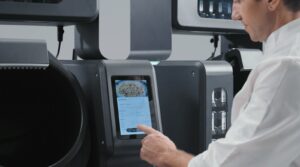
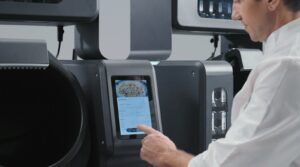
OMNI combines defined cooking functions, including automated stirring, automated seasoning, temperature control and dishing. Each function supports a step in the preparation process. The operational value is a clearer execution of programmed instructions, while staff remain responsible for oversight and the wider kitchen workflow.
How does automated stirring and seasoning work?
OMNI’s Auto Stir and Auto Seasoning features carry out programmed cooking actions as part of a recipe. Automated stirring reduces the need for continuous manual stirring during that step, while automated seasoning applies seasoning according to the programmed instructions. Together with temperature control and dishing, these functions support a structured cooking sequence. They don’t guarantee identical results in every kitchen: recipe fit, setup and operating conditions still matter.
A practical process can be mapped in four stages:
- Set up: Staff prepare the cooking task and select a supported recipe.
- Run: The system executes its programmed cooking steps, including automated stirring and seasoning where specified.
- Oversee: Staff monitor the process and manage any work outside the system’s defined functions.
- Dish and serve: Auto Dishing Up supports the final cooking step before staff continue with service.
How can digital recipe management support consistency?
Digital recipe management is the computerized control and distribution of recipe instructions and parameters. For a QSR, it can help teams return to the same documented process when preparing supported dishes across shifts. It gives operators a clearer basis for reviewing recipe execution, while staff oversee preparation and respond to service needs.
To assess whether cooking automation fits your operation, begin by assessing current operations and identifying where repeatable cooking steps align with the menu. For a closer look at a focused cooking system, review the BOTINKIT OMNI AI Commercial Kitchen Robot. Restaurant automation for quick service restaurants can include many technologies, but a cooking robot addresses specific food-preparation tasks rather than ordering, customer platforms or the whole operation.
Compare QSR automation options by task, workflow, and menu fit
Compare options by the job each one performs, not by broad claims about automation. Order-management software, workflow tools and automated cooking systems address different stages of QSR operations. One may help organize order information, another may support task coordination, while a cooking robot performs defined food-preparation steps. They aren’t interchangeable, and a system’s value depends on whether it addresses a real need in your operation.
| Automation category | Task addressed | Menu relevance | Staff interaction | Technical dependencies to verify |
|---|---|---|---|---|
| Order-management software | Organizes order information and related processes. | Applies across menu types; it doesn’t cook menu items. | Staff use or oversee the software as part of order handling. | Check compatibility with existing ordering and information systems. |
| Workflow tools | Helps coordinate operational steps and task flow. | Relevant where the need is organizing work, rather than performing a cooking step. | Staff follow and manage the workflow. | Confirm how the tool fits current processes and staff responsibilities. |
| Automated cooking systems | Performs defined cooking steps, such as automated stirring and seasoning. | Best assessed against supported, repeatable recipes and cooking methods. | Staff set up and oversee the task, then continue with work beyond the system’s functions. | Verify menu fit, space and the system’s documented electrical requirements. |
When is an automated cooking system a better fit than software alone?
Consider cooking automation when a recurring, recipe-led preparation step is a bottleneck and the system’s confirmed functions match the dish. Software can organize information or tasks, but it doesn’t perform physical cooking. OMNI is a focused option for assessing automated stir-frying and other supported cooking steps, not a full restaurant platform. For broader product context, see the BOTINKIT OMNI AI Commercial Kitchen Robot.
What should operators compare across cooking systems?
Check supported cooking functions, recipe controls, documented portion examples and technical requirements against your actual menu and peak workflow. For context, the documented Carbonara example cooks 8 kg for 20 portions in 8 minutes. Treat that as a recipe-specific example, not a performance promise for other dishes. OMNI’s listed electrical information is 220 V, 3-Phase, 5-wire; MAX 12 kW (24 A) and 15 kW (30 A); 2 kW per unit. Confirm the applicable configuration for your sales area: this product supports the electrical requirements of different countries and regions; specific specifications may vary by sales area.
Decision rule: Choose a cooking system only when its supported cooking steps fit your menu, its operation suits peak workflow and the site can meet its confirmed technical requirements. That’s how restaurant automation for quick service restaurants becomes a task-specific decision, rather than a bet on a broad promise.
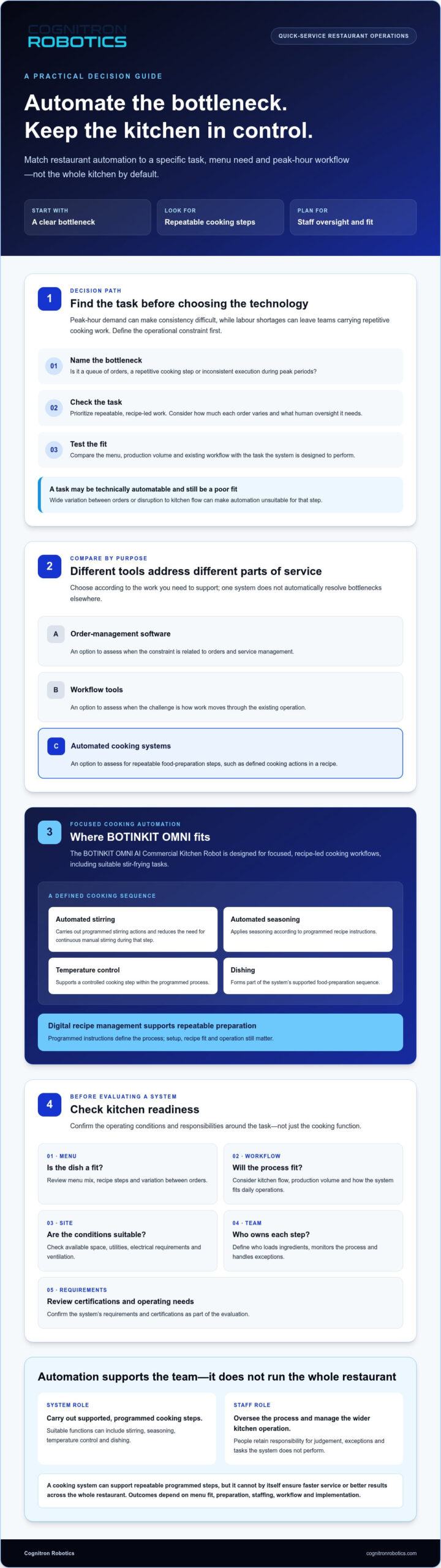
Assess kitchen readiness before adopting restaurant automation
Before selecting a cooking system, check that the menu, workflow and site can support it. This readiness review helps identify practical fit and unresolved questions before you consider restaurant automation for quick service restaurants.
- Confirm menu fit. Identify dishes with repeatable cooking steps, then verify that the system supports the preparation method and recipe requirements. Don’t assume every menu item is suitable.
- Map the workflow. Decide where cooking takes place during service and how ingredients, orders and finished dishes move around the station. Check that adding a cooking system supports, rather than obstructs, peak-hour work.
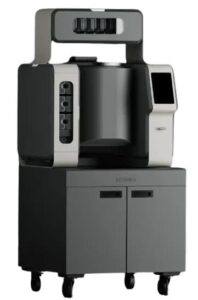
- Measure available space. The BOTINKIT OMNI dimensions are 1769 mm high, 827 mm wide and 920 mm deep. Confirm that the planned position accommodates the unit and fits the site layout.
- Check utilities and ventilation. Compare the site’s electrical supply, water pressure and hood exhaust with the documented requirements. Ask qualified site and equipment professionals to confirm suitability.
- Assign responsibilities. Identify who oversees recipes, ingredient preparation, loading, serving and cleaning. The system supports cooking tasks; staff continue to manage preparation and the wider service operation.
Which technical requirements should a QSR verify?
OMNI’s listed electrical information is 220 V, 3-Phase, 5-wire; MAX 12 kW (24 A) and 15 kW (30 A); 2 kW per unit. Confirm which configuration applies to your sales area. The documented water-pressure range is 200-350 kPa, and the hood exhaust requirement is above 3000 m³/h per OMNI unit.
this product supports the electrical requirements of different countries and regions; specific specifications may vary by sales area. Have qualified professionals confirm the applicable configuration and assess whether the site’s electrical, water and ventilation provisions meet the requirements. Don’t assume the same setup applies at every location.
How should teams prepare for workflow changes?
Agree on who handles each handoff before introducing the system. Plan staff familiarization with the confirmed Auto Voice Guide and Auto Cleaning features, including how they fit into your team’s operating and cleaning responsibilities. This preparation clarifies how the system fits the shift without assigning it work beyond its documented functions.
Use any gaps in the checklist to shape your product discussion. Contact the team to discuss OMNI and your site’s menu, workflow and technical requirements.
Where BOTINKIT OMNI fits in quick-service restaurant automation
The BOTINKIT OMNI AI Commercial Kitchen Robot is a focused option for QSRs assessing automated stir-frying and recipe-led cooking. It is designed to perform defined cooking steps, not manage every restaurant task. Its fit depends on whether your menu includes supported recipes, whether batch quantities suit your production needs and whether the process aligns with your service workflow.
Documented examples can help operators frame an evaluation, provided they’re treated as recipe-specific rather than general performance promises:
- 8 kg for 20 portions in 8 minutes.
- 4 kg for 10 portions in 6 minutes.
- Carbonara: 400 g per portion, with a documented preparation time of 3 minutes for one portion.
Confirm that any example matches the dish and batch you intend to prepare. Recipe, quantity and process all matter when assessing whether a cooking system can support your operation.
Which OMNI features matter to a QSR evaluation?
Review each function against a real step in your kitchen. Auto Seasoning applies programmed seasoning; Auto Stir performs automated stirring; Auto Temperature Control manages temperature as part of the cooking process; and Auto Dishing Up supports the dishing step. Auto Cleaning is a listed feature to consider when planning the cleaning workflow. These functions support defined tasks, while staff retain responsibility for preparation, oversight and service.
The listed cooking features also include a Tilting Braising Pan, Induction Wok Stove, Flat Top Griddle and Gas Range. Check how these options relate to your recipes and production process rather than assuming every configuration or cooking method will suit every menu.
What should happen before a product decision?
Match your menu and batch needs against documented capabilities. Review the applicable technical requirements and workflow questions with Cognitron Robotics before deciding whether OMNI fits your site. This keeps the evaluation grounded in your actual recipes, production volumes and staff responsibilities.
For product details, visit the BOTINKIT OMNI product page. You can also review the kitchen automation ROI case study as a separate reference, while assessing its context against your own operation. Restaurant automation for quick service restaurants works best as a fit-based decision: confirm the menu match, understand the documented process and resolve technical questions before moving forward.
Make your next automation decision with confidence
Effective restaurant automation for quick service restaurants starts with a defined operational need. Match the system to repeatable menu tasks, then assess its fit with peak-hour workflow, available space, utilities and staff responsibilities. Cooking robotics can support consistent execution of suitable recipes while your team continues to oversee preparation and service.
The BOTINKIT OMNI is a focused option for restaurants evaluating automated cooking. BOTINKIT reports over 6,000 units shipped and over 64 million dishes prepared. OMNI’s documented credentials include NSF/ANSI 4 and USA & Canada (NA). Consider these facts alongside the system’s specific capabilities and your own kitchen requirements, rather than treating them as a guarantee of results at your site.
Ready to assess whether OMNI fits your menu and operation? Contact Cognitron Robotics to discuss automation for your quick-service restaurant. A clear review of your recipes, workflow and technical environment can help you take the next step with purpose. Automation should strengthen your team’s ability to deliver consistent service, one well-matched task at a time.
Frequently Asked Questions
What does restaurant automation include for quick-service restaurants?
Restaurant automation can include technology for ordering, workflow coordination and defined kitchen tasks, but these are separate categories. For a QSR, identify the bottleneck first: managing order information, coordinating task handoffs or repeating a cooking process. Cognitron Robotics focuses on the BOTINKIT OMNI commercial cooking robot for automated stir-frying and recipe-led preparation, not a complete ordering or restaurant-management platform. Match each system to the task it is meant to support.
How can automation support a quick-service restaurant kitchen?
Automation can support kitchen teams by performing defined, repetitive tasks and helping staff follow programmed cooking instructions. OMNI features automated stirring, automated seasoning, temperature control and dishing functions for supported recipes. Digital recipe management can help teams use stored instructions across shifts. These capabilities support cooking workflow and repeatability, but outcomes also depend on menu fit, site setup and how staff integrate the system into daily operations.
Can a cooking robot work with a quick-service restaurant menu?
It can be a fit when the menu includes recipes and cooking steps supported by the system. OMNI is designed for recipe-led cooking, with examples including Carbonara, Pad Thai, fajita and butter chicken. Check the specific recipe, preparation method and batch requirement before deciding. Don’t assume every menu item is suitable; compare your kitchen’s actual dishes with confirmed cooking capabilities and plan for staff oversight.
What should a restaurant check before installing an automated cooking system?
Check menu fit, workflow, available space, utilities, ventilation and staff responsibilities. OMNI measures 1769 mm high, 827 mm wide and 920 mm deep. Its listed requirements include 220 V, 3-Phase, 5-wire, water pressure of 200-350 kPa and hood exhaust above 3000 m³/h per unit. Confirm the applicable electrical configuration and site suitability with qualified professionals. this product supports the electrical requirements of different countries and regions; specific specifications may vary by sales area.
How many portions can BOTINKIT OMNI prepare in one batch?
OMNI supports single servings up to 30 portions at once, subject to the recipe and batch requirements. Documented Carbonara examples include 8 kg for 20 portions and 4 kg for 10 portions. These are specific examples, not a promise that every recipe can be prepared in those quantities. Confirm the portion size and batch details for the dishes you plan to make before assessing menu fit.
How long does BOTINKIT OMNI take to cook a batch?
Cooking time depends on the specific recipe and quantity. For Carbonara at 400 g per portion, the documented examples are 8 kg for 20 portions in 8 minutes, 4 kg for 10 portions in 6 minutes, and 400 g for one portion in 3 minutes. Use these figures only for that example. Confirm preparation times for other recipes rather than assuming they will match.
Does restaurant automation replace kitchen staff?
No. Cooking automation is designed to perform defined tasks, while people continue to oversee preparation and manage the wider kitchen workflow. With OMNI, staff still have responsibilities such as preparing ingredients, setting up cooking tasks, monitoring the process, serving and handling work outside the robot’s functions. This approach can support teams with repetitive cooking steps without presenting robotics as a replacement for human judgement and service.