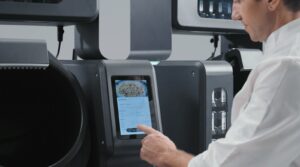
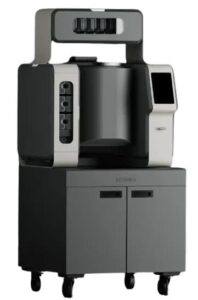
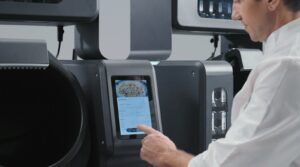
A robotic commercial wok station is most useful when its repeatable cooking steps match your menu, service pace and kitchen setup. Stirring alone is not the whole picture: batch size, recipe instructions, staff handoffs and facility requirements all affect whether a system fits your operation.
If manual stir-frying varies between shifts, you know how much consistency can depend on the cook at the wok. The BOTINKIT OMNI combines an induction wok stove with automated stirring, seasoning and temperature control, along with digital recipe management. These capabilities support defined cooking steps while staff remain central to preparation and service.
This guide explains which tasks a robotic wok station can automate and how its workflow compares with manual cooking. Use the menu, batch needs, electrical requirements and kitchen layout as practical checks before considering a product discussion. The goal is to assess whether automation suits your service model, not to assume it will improve every operation in the same way.
Key Takeaways
- Identify which wok-cooking tasks a robotic commercial wok station can automate and which responsibilities stay with kitchen staff.
- Assess how digital recipe instructions, stirring, seasoning and temperature control work together to support defined cooking steps.
- Compare automated and manual workflows against your menu, service pace and team’s responsibilities before deciding which approach fits.
- Check kitchen space, utilities, ventilation and staff workflow. The BOTINKIT OMNI measures 1769 mm high, 827 mm wide and 920 mm deep.
- Use the OMNI’s confirmed capabilities to frame practical questions about recipes, batch needs and kitchen fit.
What a Robotic Commercial Wok Station Automates in a Professional Kitchen
A robotic commercial wok station is a commercial cooking system that automates selected wok-cooking steps, such as stirring, seasoning and temperature control, according to programmed instructions.
Its role is to support repeatable cooking tasks within a professional foodservice operation, not to run the kitchen without people. The BOTINKIT OMNI AI Commercial Kitchen Robot combines an induction wok stove with automated stirring, automated seasoning, temperature control and digital recipe management. These functions give teams defined cooking steps to assess and follow. Results can still depend on the recipe, ingredients, batch size and service model, so check menu suitability and workflow before deciding how the system may fit.
Automation in restaurants can support operational aims such as consistency and efficiency. The broader context is outlined in Automated restaurant. For a commercial kitchen, the practical question is which repeated cooking tasks a system can support within your operation.
Which cooking tasks can a robotic wok station handle?
Automated stirring means the system stirs during programmed cooking, reducing the need for a cook to stir continuously by hand. Automated seasoning applies seasoning according to programmed instructions. Temperature control supports the cooking process by managing heat as directed by the recipe. With the OMNI, these functions work alongside digital recipe management, giving the team defined cooking instructions to assess and follow.
Where does automation fit alongside kitchen staff?
The robot supports selected cooking steps while staff remain central to kitchen operations. Before adopting one, map the handoffs from ingredient preparation through cooking and service. Identify who prepares and loads ingredients, who oversees the programmed cycle, and who handles finishing and serving. For example, a team member might supervise cooking while the system performs programmed stirring. Check that this task split fits your menu and workflow.
This assessment helps identify where automation could support repeatability and where staff expertise, oversight or finishing remains essential. Review the BOTINKIT OMNI cooking robot details to compare its documented functions with the tasks your team wants to standardize.
How a Robotic Commercial Wok Station Runs a Repeatable Cooking Cycle
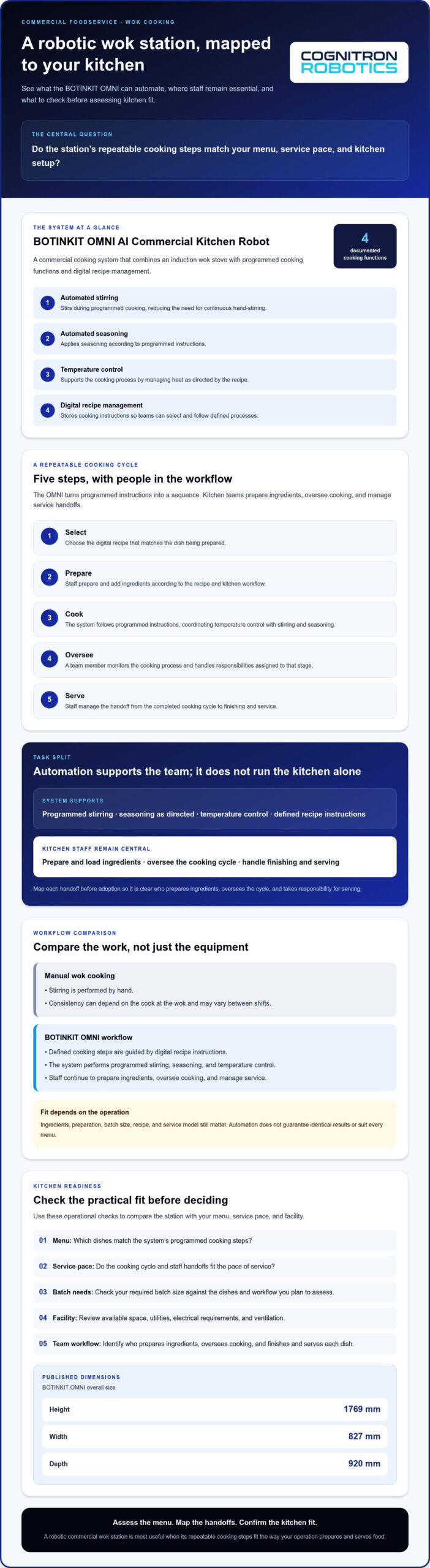
A robotic commercial wok station turns programmed cooking instructions into a sequence of coordinated steps. With the BOTINKIT OMNI, digital recipe management works alongside automated stirring, automated seasoning and temperature control. This provides kitchen teams with a defined process to follow while staff prepare ingredients, oversee cooking and manage service.
A practical cycle can be understood in five steps:
- Select: Choose the digital recipe that matches the dish being prepared.
- Prepare: Staff prepare and add ingredients according to the recipe and the kitchen’s workflow.
- Cook: The system follows programmed instructions, coordinating temperature control with automated stirring and seasoning.
- Oversee: A team member monitors the cooking process and handles the responsibilities assigned to that stage.
- Serve: Staff manage the handoff from the completed cooking cycle to finishing and service.
Exact handoffs depend on the menu and operation. Map them before adoption so it is clear who prepares ingredients, oversees the cycle and takes responsibility for serving.
How do digital recipes guide cooking operations?
Digital recipe management stores cooking instructions so teams can select and follow defined processes rather than rely only on individual memory. In the OMNI, those instructions connect with documented functions: automated stirring performs programmed mixing, automated seasoning applies seasoning as directed, and temperature control supports the programmed cooking process.
This can help teams follow the same defined steps across shifts, but it does not guarantee identical results. Ingredients, preparation and operating conditions still matter. Franchise operators considering standardized recipe processes can also explore the related topic, Digital Recipe Management for Modern Canadian Franchises.
What do the documented portion and timing examples show?
The examples show how listed carbonara quantities and portion counts relate to their documented preparation times. They are not universal timings for every recipe or kitchen, and should not be treated as a promise of service speed.
Documented carbonara examples: 8 kg for 20 portions in 8 minutes; 4 kg for 10 portions in 6 minutes; and 400 g for one portion in 3 minutes. These examples are distinct from the OMNI’s maximum supported batch size of up to 30 portions per batch.
Use the figures as specific reference points, then assess your recipes, portion sizes and workflow. To discuss how the BOTINKIT OMNI cooking robot may fit your operation, compare its documented functions with the tasks your team wants to standardize.
Robotic vs. Manual Wok Cooking: Compare the Workflow and Menu Fit
Manual and automated wok cooking differ in how defined cooking steps are carried out, not in whether people matter. A robotic commercial wok station can perform programmed tasks, while staff prepare ingredients, oversee cooking and coordinate service. Compare both workflows against your menu and operation rather than assuming automation will always be faster or a better fit.
| Criteria | Manual wok cooking | Robotic wok cooking |
|---|---|---|
| Task repeatability | A cook performs each step by hand; execution can depend on technique and attention. | Documented functions such as automated stirring, automated seasoning and temperature control follow programmed instructions. |
| Staff involvement | The cook actively manages the wok, alongside ingredient preparation and service handoffs. | Staff remain responsible for preparation, oversight and the wider service workflow; the system supports selected cooking steps. |
| Recipe control | Instructions may be followed through the kitchen’s existing methods and staff practices. | Digital recipe management provides defined cooking instructions for the team to follow. |
| Menu fit | Hands-on methods can suit dishes that depend on a cook’s direct judgement or varied preparation. | Programmed cooking may suit dishes with repeatable instructions and batch preparation; suitability depends on the recipe and operation. |
Which parts of the cooking workflow are suitable for comparison?
Compare cooking-stage responsibilities: who manages each step, how closely the recipe can be defined, and what oversight the process needs. Preparation and service remain part of the full workflow either way. Map these handoffs in your kitchen to see whether programmed steps fit the way orders move through service or require changes to staff roles.
The table outlines workflow differences, not a universal performance ranking. Outcomes depend on the recipe, ingredients, batch plan and how the station fits into your kitchen’s routine. For a detailed look at how these two approaches compare using practical operating criteria, the BOTINKIT vs. manual wok cooking commercial kitchen case study examines recipe repeatability, batch size and operator involvement side by side.
How should operators assess menu and service fit?
Start with dishes that use defined cooking instructions and are prepared in batches. OMNI’s documented cuisine examples include Pad Thai, butter chicken and carbonara. Treat these as examples of supported applications, not confirmation that every dish, portion or service condition will suit automated cooking.
For each candidate dish, check preparation steps, portioning, recipe parameters, finishing requirements and expected order flow. Ask which tasks remain with staff and whether the cooking cycle aligns with how the kitchen serves the dish. The Complete Guide to the Automated Stir-Fry Cooking System offers related context for reviewing this workflow; confirm specific capabilities against product information. Operators planning a broader rollout may also find it useful to review the robotic cooking for food service implementation guide, which covers recipe setup, team training and technical environment preparation.
How to Check Kitchen Readiness for a Robotic Commercial Wok Station
Kitchen readiness involves more than finding room for a new cooking station. Before considering a robotic commercial wok station, check whether its menu role, physical placement and utility requirements fit your operation. This review can surface practical questions early and help you plan how staff will work around the cooking cycle.
Which technical requirements should operators confirm?
The BOTINKIT OMNI measures 1769 mm high, 827 mm wide and 920 mm deep. Check the proposed location and surrounding workspace against these dimensions, then confirm the site’s connections and ventilation requirements with the appropriate technical contacts.
Product information lists a recommended 220 V, 3-phase, 5-wire electrical box configuration. The listed maximum ratings are 12 kW (24 A) and 15 kW (30 A), with 2 kW per unit. The specified water-pressure range is 200-350 kPa, and the hood exhaust requirement is > 3000 m³/h per OMNI unit. Confirm which electrical rating applies to the sales area and installation, and have the site’s available utilities and ventilation assessed for suitability.
This product supports the electrical requirements of different countries and regions; specific specifications may vary by sales area.
What should a pre-installation discussion cover?
Bring menu and site details into the readiness review. Confirm the intended dishes and batch plan, available floor space, utility connections, ventilation and station placement. Then map staff responsibilities: who prepares and loads ingredients, who oversees cooking, and how each dish moves to finishing and service. This helps determine whether the cooking cycle fits the kitchen’s actual routine.
- Menu: Identify dishes with defined cooking instructions and repeatable preparation steps.
- Space: Check the station dimensions against the proposed location and working area.
- Utilities: Verify electrical supply and water pressure against the listed requirements.
- Ventilation: Review hood exhaust capacity against the stated figure per unit.
- Workflow: Plan staff responsibilities before, during and after the cooking cycle.
Use these figures as starting points for a site-specific review, not as confirmation that a particular installation is suitable. Contact the Cognitron Robotics team to discuss your kitchen requirements and the technical details to verify for your operation.
Assessing BOTINKIT OMNI as a Robotic Commercial Wok Station
The BOTINKIT OMNI brings documented cooking functions together in one system for professional foodservice operations. Assess each function against your recipes, batch needs and staff workflow to determine whether this robotic commercial wok station suits your kitchen. Its purpose is to support the team with repeatable cooking steps, not remove staff from preparation, oversight or service.
Which confirmed OMNI capabilities matter for wok cooking?
The OMNI’s listed features include an induction wok stove, auto stir, auto seasoning and auto temperature control. Assess whether automated stirring and seasoning align with your selected recipes, and whether temperature control supports the cooking instructions your team wants to standardize. Digital recipe management provides defined instructions for team members to follow and review.
Other listed features include an auto voice guide, auto dishing up and auto cleaning. During a product discussion, confirm the scope of each feature and how it relates to your procedures. A feature name alone does not establish how it will fit a particular menu or workflow. For a closer look at what precision cooking can realistically deliver in day-to-day operations, the article on precision cooking myths about commercial kitchen cooking robots separates realistic capabilities from common overclaims.
The product brochure lists NSF/ANSI 4 and USA & Canada (NA) among its certifications. Treat these as the documented certification details, and confirm any further requirements relevant to your operation rather than assuming additional approvals.
What are the next steps for evaluating a robotic wok station?
Prepare specific questions before discussing the OMNI. A focused review connects product functions to operational needs rather than relying on broad assumptions.
- Recipes: Which menu items use repeatable cooking instructions, and what needs to be confirmed about recipe setup?
- Batch needs: What portion sizes and batch patterns does your service require?
- Kitchen readiness: Which electrical, water, space and ventilation details need a site-specific review?
- Staff workflow: Who prepares ingredients, oversees cooking and handles the handoff to service?
These questions can guide a practical evaluation without presuming a particular result for speed, consistency or staffing. Review the BOTINKIT OMNI commercial cooking robot details alongside your menu and facility requirements. For broader purchasing considerations, consult the commercial cooking buyer’s guide referenced in this article.
Contact Cognitron Robotics to discuss OMNI and the recipes, batch needs and technical requirements you’re assessing.
Turn Readiness Into a Clear Evaluation
Assess a robotic commercial wok station against the work your kitchen needs done, rather than treating it as a shortcut to a one-size-fits-all result. Focus on whether programmed cooking steps match your menu, whether the station fits your facility, and how staff will prepare, oversee and serve each dish.
The BOTINKIT OMNI brings documented cooking functions together to support repeatable execution while kitchen teams remain central to service. BOTINKIT reports over 6,000 units shipped. The documented cooking examples and product specifications can help you evaluate fit against your recipes, batch needs and technical environment.
Bring those details into a product discussion. Review the dishes you want to assess, your kitchen’s utility requirements and the staff handoffs that shape your service. Contact Cognitron Robotics to discuss BOTINKIT OMNI and identify the right questions for your operation. A practical evaluation can help your team decide on its next step.
Frequently Asked Questions
What is a robotic commercial wok station?
A robotic commercial wok station is a cooking system that automates selected steps in wok-style food preparation. Depending on the system, those steps may include stirring, seasoning and temperature control. It operates within a professional kitchen, where staff still manage ingredient preparation, oversight and service. Review the specific product’s documented functions before assessing fit, since the tasks automated by one station may not apply to another.
How does a robotic wok station cook food?
A system such as BOTINKIT OMNI uses digital recipe management alongside documented functions such as automated stirring, automated seasoning and temperature control. An operator selects or follows a programmed recipe, and the system performs its supported cooking steps. The exact process depends on the recipe and the product’s confirmed functions. Do not assume every dish follows the same sequence or takes the same time to prepare.
Can a commercial wok robot prepare different cuisines?
BOTINKIT OMNI’s documented cuisine examples include Italian, Mexican, Thai, Korean, Indian, Mediterranean, Tex-Mex and Chinese dishes. Examples include carbonara, Pad Thai, tteok-bokki, butter chicken, spanakorizo, beef taco meat and sweet and sour chicken. These examples indicate a range of possible applications, not confirmation that every menu item is supported. Check your recipes, preparation steps and service requirements with the provider before deciding whether they fit.
How many portions can BOTINKIT OMNI cook in one batch?
BOTINKIT OMNI supports up to 30 portions per batch, according to the product information. Documented carbonara examples include 8 kg for 20 portions in 8 minutes, 4 kg for 10 portions in 6 minutes, and 400 g for one portion in 3 minutes. These examples apply to carbonara, not every dish. Compare your intended recipe, portion size and batch requirements during evaluation.
What should a kitchen check before installing a robotic wok station?
Review available floor space, electrical configuration, water pressure, hood exhaust, menu needs and staff workflow. BOTINKIT OMNI’s listed dimensions are 1769 mm high, 827 mm wide and 920 mm deep. Its recommended electrical configuration is 220 V, 3-phase, 5-wire; confirm the applicable rating for your installation. This product supports the electrical requirements of different countries and regions; specific specifications may vary by sales area. Check site suitability before proceeding.
Does a robotic wok station replace kitchen staff?
No. A robotic wok station automates selected cooking actions, while people remain essential to the wider kitchen operation. Staff continue to manage ingredient preparation, recipe decisions, cooking oversight and handoffs to service. The division of tasks depends on your workflow and the product’s confirmed functions. Assess robotic cooking for food service as a way to support the team and make defined cooking steps more repeatable, not as a replacement for kitchen staff.